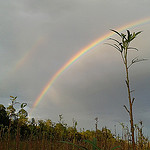
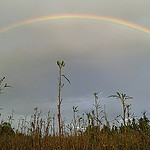
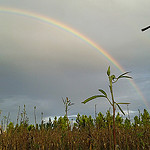
Storm front seen from GA 122 near the Withlacoochee River:
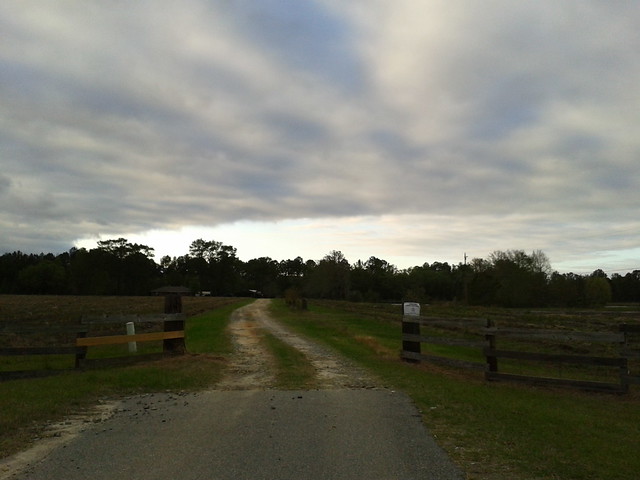
You can see it moving right to left (east to west) in this video:
Continue readingStorm front seen from GA 122 near the Withlacoochee River:
You can see it moving right to left (east to west) in this video:
Continue reading
Higher average temperatures
 mean much more frequent droughts and trees dying faster in droughts
because of the temperatures.
That plus pine beetles, according to research from 2009.
Forestry is Georgia’s second largest industry
in terms of
employment and wages and salaries,
more than $28 billion a year
according to the Georgia Forestry Commission,
plus an estimated
$36 billion a year in ecosystem services
such as water filtration, carbon storage, wildlife habitat, and aesthetics,
not to mention hunting and fishing.
Climate change matters to Georgia’s forests and to Georgia.
mean much more frequent droughts and trees dying faster in droughts
because of the temperatures.
That plus pine beetles, according to research from 2009.
Forestry is Georgia’s second largest industry
in terms of
employment and wages and salaries,
more than $28 billion a year
according to the Georgia Forestry Commission,
plus an estimated
$36 billion a year in ecosystem services
such as water filtration, carbon storage, wildlife habitat, and aesthetics,
not to mention hunting and fishing.
Climate change matters to Georgia’s forests and to Georgia.
The paper appeared 13 April 2009 in the Proceedings of the National Academy of the Sciences, Temperature sensitivity of drought-induced tree mortality portends increased regional die-off under global-change-type drought, by Henry D. Adams, Maite Guardiola-Claramonte, Greg A. Barron-Gafford, Juan Camilo Villegas, David D. Breshears, Chris B. Zou, Peter A. Troch, and Travis E. Huxman, 106(17) 7063-7066, doi: 10.1073/pnas.0901438106.
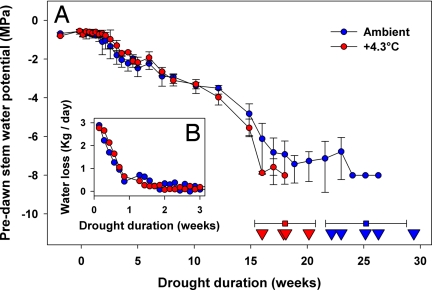
All drought trees in the warmer treatment died before any of the drought trees in the ambient treatment (on average 18.0 vs. 25.1 weeks, P <0.01; Fig. 1A).
They say warmer trees dying faster in drought wasn’t due to a difference in amount of water. Instead, they infer the warmer trees couldn’t breathe.
Combined, our results provide experimental evidence that piñon pines attempted to avoid drought-induced mortality by regulating stomata and foregoing further photosynthesis but subsequently succumbed to drought due to carbon starvation, not sudden hydraulic failure. Importantly, we isolate the effect of temperature from other climate variables and biotic agents
and show that the effect of warmer temperature in conjunction with drought can be substantial.
Our results imply that future warmer temperatures will not only increase background rates of tree mortality (13, 16), but also result in more frequent widespread vegetation die-off events (3, 35) through an exacerbation of metabolic stress associated with drought. With warmer temperatures, droughts of shorter duration—which occur more frequently—would be sufficient to cause widespread die-off.
How much more frequently?
They calculated an estimate for that, too: five times more frequently.
Of course, that’s for the specific kinds of forests they were studying,
and the exact number may vary, but the general trend is clear:
higher temperatures mean more frequent droughts,
like
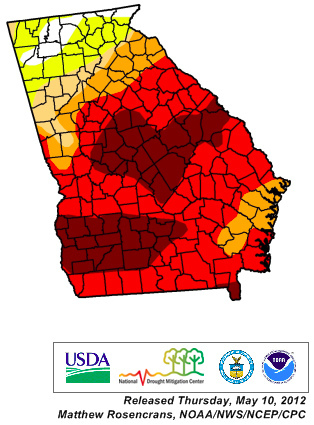 the year-long drought we just experienced in south Georgia.
This projection is conservative because it is based on the historical drought record and therefore does not include changes in drought frequency, which is predicted to increase concurrently with warming (2, 37—39). In addition, populations of tree pests, such as bark beetles, which are often the proximal cause of mortality in this species and others, are also expected to increase with future warming (7, 9, 38).
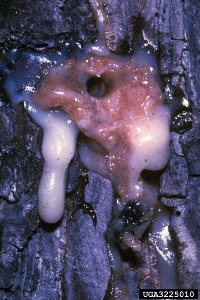
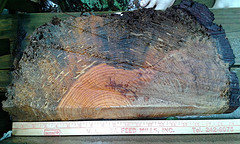
Bark beetles, such as the ones that bored into this 19 inch slash pine
and spread from there to twenty others I had to cut down to prevent further spread
of the pine beetles.
What happens when pine beetles spread
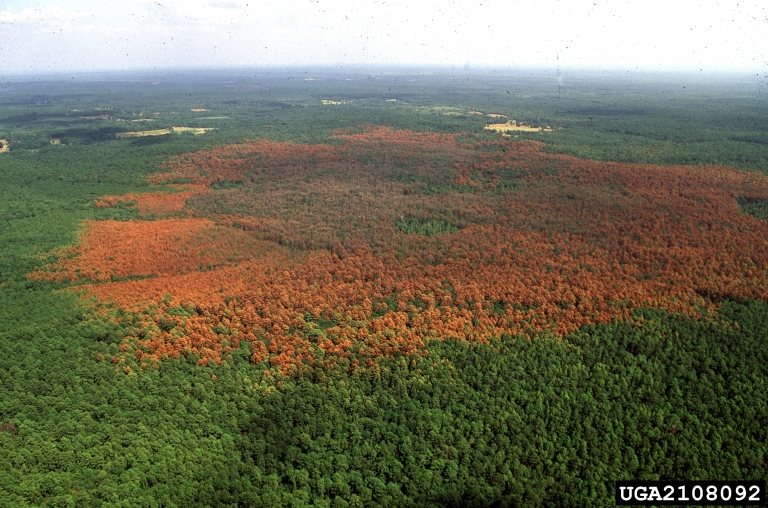
is what you see in the
first picture in this post:
acres and acres of dead red pine trees.
 Monoculture slash pine plantations may show this effect most clearly,
but look around here, and you’ll see red dead loblolly and longleaf pines,
too.
Monoculture slash pine plantations may show this effect most clearly,
but look around here, and you’ll see red dead loblolly and longleaf pines,
too.
The article is saying that if the beetles don’t get the trees weakened by droughts that will be much more frequent, the trees will die more quickly of suffocation, because the temperature is higher. Higher temperatures is something that should concern every Georgian in our state where forestry is the second largest industry and our forests protect our wildlife and the air that we breathe and the water that we drink.
-jsq
It's not just us. More than half the country is in drought, and almost one third is in a federal disaster area for drought: the biggest ever declared.
Dashiell Bennett wrote for Atlantic Wire today, U.S. Declares the Largest Natural Disaster Area Ever Due to Drought
The blistering summer and ongoing drought conditions have the
prompted the U.S. Agriculture Department to declare a federal disaster area in more than 1,000 counties covering 26 states. That's almost one-third of all the counties in the United States, making it the largest distaster declaration ever made by the USDA.
The declaration covers almost every state in the southern half of the continental U.S., from South Carolina in the East to California in the West. It's also includes Colorado and Wyoming (which have been hit by devatasting wildfires) and Illinois, Indiana, Kansas and Nebraska in the Midwest. However, it does not include Iowa, which is the largest grain and corn producer in the U.S. This map show the counties affected:
Look, there we are, right in the center of the red area in the southeast!
-jsq
 This tree was
struck by lightning almost two years ago and then pine beetles got into it. It’s been dead for more than a year, and it was leaning towards the house, so we had to take it down.
This tree was
struck by lightning almost two years ago and then pine beetles got into it. It’s been dead for more than a year, and it was leaning towards the house, so we had to take it down.
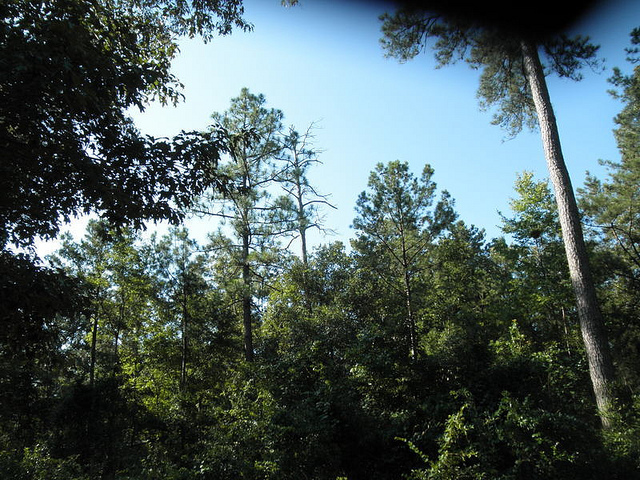
Distant
John S. Quarterman, Gretchen Quarterman, Brown Dog, Yellow Dog,
Picture by Gretchen Quarterman for Okra Paradise Farms, Lowndes County, Georgia, 18 June 2012.
Zoom:
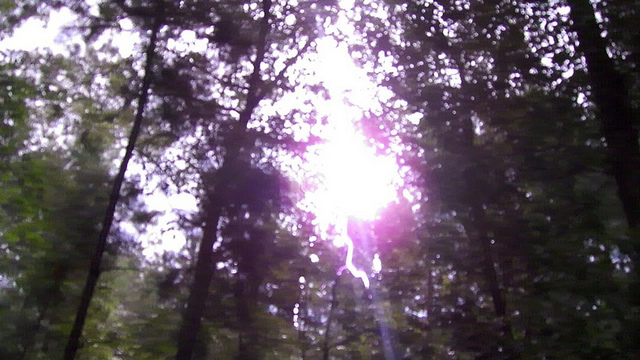
Gretchen went back inside after lightning struck a tree less than 100 feet from where she was taking this video two years ago. This is the tree we had to take down last week. Strike:
Strike
John S. Quarterman, Gretchen Quarterman, Brown Dog, Yellow Dog,
Pictures by Gretchen Quarterman for Okra Paradise Farms, Lowndes County, Georgia, 3 August 2010.
Streak:
Pumpkins:
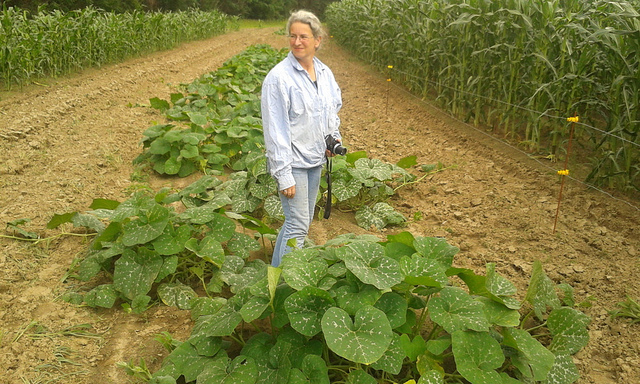
John S. Quarterman and Gretchen Quarterman with Brown Dog and Yellow Dog.
Pictures by John S. Quarterman for Okra Paradise Farms Lowndes County, Georgia, 11 June 2012.
Rain coming in:
Acording to U.S. Drought Monitor, drought throughout south Georgia and surrounding areas is either extreme or exceptional, and has been for months.
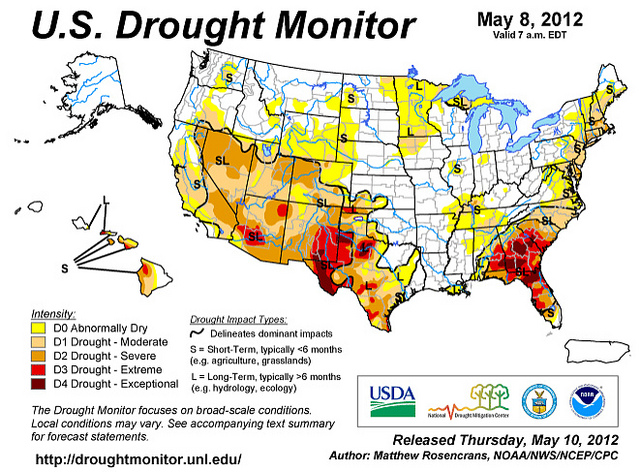
Here you can see detail for Georgia:
Continue readingWe’re on Georgia Water Coalition’s Dirty Dozen 2011: as 9. South Georgia Wetlands: Four Decades of Ditches Dry Out South Georgia Wetlands:
Since the 1970s, state and federal regulatory agencies have allowed the destruction of more than 200,000 acres of highly critical wetlands throughout South Georgia to increase timber production and agricultural yields and usher in residential and commercial development. These wetlands that captured water and slowly released it to streams no longer perform that important function. The result has been increased floods when it rains and record low flows when it doesn’t….
Flooding? Like the 700 year flood in Lowndes County 3 years ago today?
What’s a wetland, anyway?
the greatest concentration of wetlands is in the Coastal Plain of South Georgia. Though these forested foodplains and wetlands may not seem directly linked to our rivers and streams, they play an important role in holding water during rain events and dispensing it during dry periods. The sponges and kidneys of our state, they mitigate major floods, lessen the impacts of drought, and clean the water that passes through them, while regulating the amount of freshwater entering Georgia’s coastal estuaries where commercially important seafood find critical habitat. Additionally, these wetlands provide important habitat for waterfowl and other wildlife.
So what’s the problem?
In an effort to convert these wild lands intoContinue reading

Panning around their habitat, you can’t see them, but you can hear them.
Here’s a playlist: Continue reading