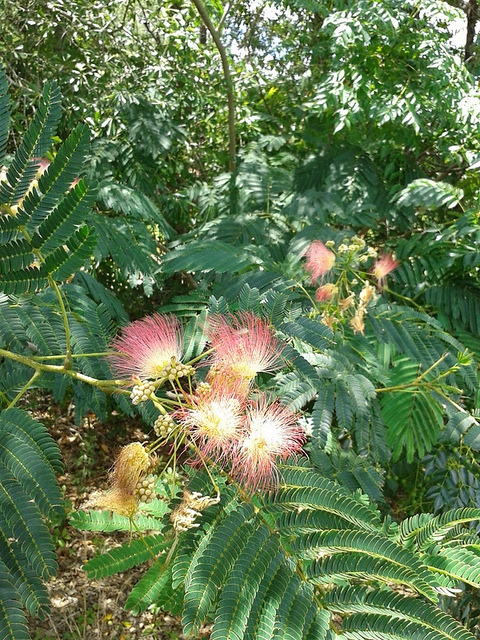
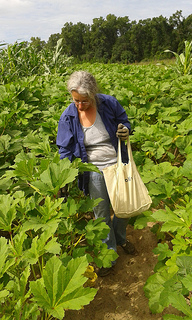
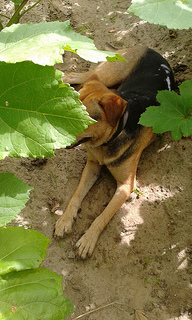
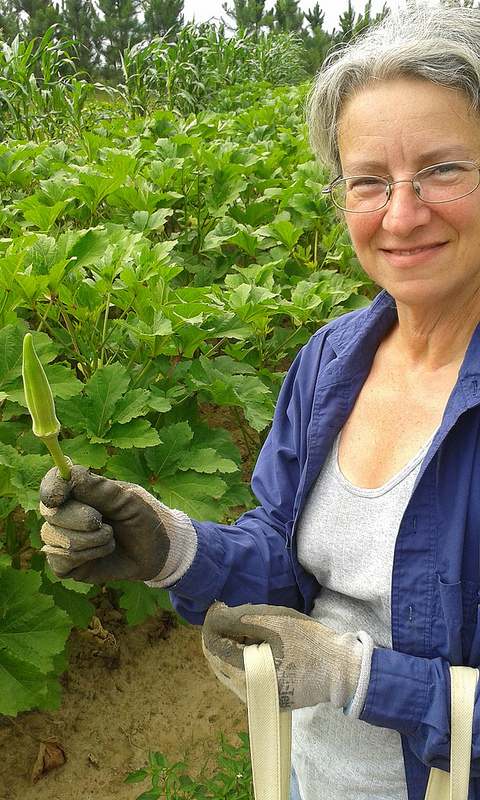
Lily:
Pictures by Gretchen Quarterman for Okra Paradise Farms, Lowndes County, Georgia, 22 April 2012.
Lilies:
Lily:
Pictures by Gretchen Quarterman for Okra Paradise Farms, Lowndes County, Georgia, 22 April 2012.
Lilies:
These are the same longleaf planted in 2008, blogged 10 October 2010, burned a second time
16 December 2011, and greening and candling again February 2012.
Pictures of Gretchen Quarterman with the planted longleaf (Pinus palustris)
by John S. Quarterman for Okra Paradise Farms, Lowndes County, Georgia, 17 April 2012.
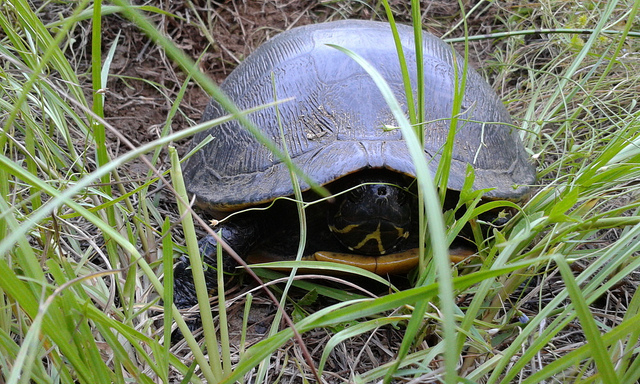
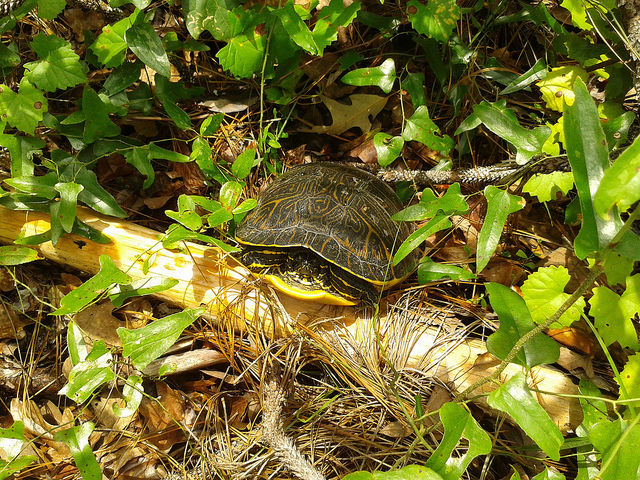
Almost all of them survived the prescribed burn, and many of them are quite tall. The planted little bluestem and big bluestem are also thriving, along with native verbena, and some less savory invasive exotics, including trash along the road. Plus Gretchen’s favorite: dog fennel! And along the fence row cedars, pecans, plums, grapes, wild cherry, and a gopher tortoise. Here’s a flickr slideshow:
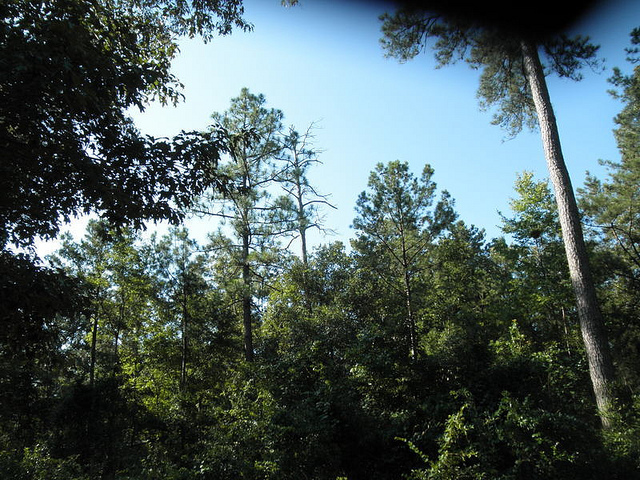
We didn’t know there were any longleaf at the bottom of the pond, but the white candles are unmistakable:
Pictures of Longleaf pine (Pinus Palustris) by Gretchen Quarterman
for Okra Paradise Farms, Lowndes County, Georgia, 22 April 2012.
The needles are also longer than on the nearby slash pines:
Continue readingHeron in slash pine tree:
Here’s a slideshow.
Does the jar grow around them?
Here’s the video:
Planting Pickles
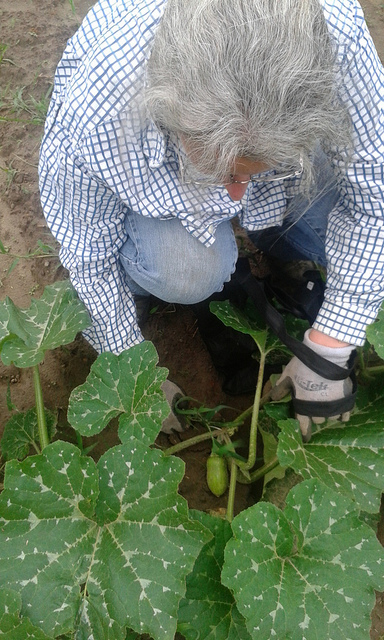
Video by John S. Quarterman of Gretchen Quarterman planting cucumbers
at Okra Paradise Farms, Lowndes County, Georgia, 16 April 2012.
-jsq
Returning for its second year, Valdosta Farm Days starts this Saturday:
|
![]() |
There’s a list of vendors on VFD’s web page. See also their facebook page.
Support local agriculture and buy direct from area farmers while shopping at Downtown Valdosta Farm Days.
The market presents producers from the surrounding areas of Lowndes County offering fresh fruit, vegetables and so much more.
Come for the freshness and stay for the fun at Downtown Valdosta Farm Days!
At the market, you’ll find locally-grown, locally-raised, locally-produced fruits and vegetables, plants, herbs, meats, farm-fresh eggs and dairy products, baked and prepared foods, snacks, and coffee. You’ll also find a variety of artisan and natural value-added products including products made from recycled goods, birdhouses, handmade soaps and body products, candles, gift baskets, and honey products.
Oh, look! Potatoes from Okra Paradise Farms! OPF won’t actually have those there this weekend (they only just bloomed last week), but stay tuned for later Valdosta Farm Days!
-jsq
In case anybody thinks the recent rains have done away with the drought in Georgia, take a look at this USGS map of groundwater levels today:
South Georgia, all red and orange. Here’s more detail.
It’s also worth remembering that while our Floridan Aquifer does recharge somewhat, that much of its water has been there since the last ice age. So if we keep mining water at a rapid rate, the aquifer will keep falling.
-jsq
It’s kind of hard to tell with the low light, the fuzzy cell phone video, and especially with them crawling over each other. You can hear them, though!
Here’s the video:
How many little birds are there?
Video by John S. Quarterman for Okra Paradise Farms, Lowndes County, Georgia, 14 April 2012.
Probably house wrens. Nesting under the eaves of the farm workshop.
-jsq
For many years big agro has treated the world’s health as an economic externality, a problem for somebody else that did not affect its own bottom line. That is starting to change, most recently in Argentina.
Anthony Gucciardi wrote for NaturalSociety 11 April 2012, Explosive: Monsanto ‘Knowingly Poisoned Workers’ Causing Devastating Birth Defects,
In a developing news piece just unleashed by acourthouse news wire, Monsanto is being brought to court by dozens of Argentinean tobacco farmers who say that the biotech giant knowingly poisoned them with herbicides and pesticides and subsequently caused ”devastating birth defects” in their children. The farmers are now suing not only Monsanto on behalf of their children, but many big tobacco giants as well. The birth defects that the farmers say occurred as a result are many, and include cerebral palsy, down syndrome, psychomotor retardation, missing fingers, and blindness.
This would be the same Monsanto that was convicted of chemical poisoning in France.
But this is once again far away in a small country of which we know nothing, right? Wrong:
The farmers come from small family-owned farms in Misiones Province and sell their tobacco to many United States distributors. The family farmers say that major tobacco companies like the Philip Morris company asked them to use Monsanto’s herbicides and pesticides, assuring them that the products were safe. Through asserting that the toxic chemicals were safe, the farmers state in their claim that the tobacco companies ”wrongfully caused the parental and infant plaintiffs to be exposed to those chemicals and substances which they both knew, or should have known, would cause the infant offspring of the parental plaintiffs to be born with devastating birth defects.”
Still, it must be some obscure poison only sold in the third world, right?
Wrong:
The majority of the farmers in the area used Monsanto’s Roundup, an herbicide with the active ingredient glyphosate that has shown to be killing human kidney cells. What’s more, the farmers say that the tobacco companies pushed Monsanto’s Roundup on the farmers despite a lack of protective equipment. In other words, these farmers — many in dire economic conditions — were being directly exposed to Roundup in large concentrations without any protective gear (or even experience or skills in handling the substance). Still, the farmers say the tobacco giants required the struggling farmers to ‘purchase excessive quantities of Roundup and other pesticides’.
That would be the same Roundup that farmers use around here all the time, without protective equipment. The Roundup we already knew was Continue reading
Brown Dog and Yellow Dog in some red pine needles:
John S. Quarterman, Gretchen Quarterman, Brown Dog, Yellow Dog,
Lowndes County, Georgia, 11 April 2012.
Pictures by John S. Quarterman for Okra Paradise Farms.
And the reason why they’re red:
Continue reading