There’s a bee in the bonnet of this Swamp rosemallow.
![[In rosemallow]](http://www.okraparadisefarms.com/pictures/2020-06-05--swamp-rosemallow-bee/bee.jpg)
Each flower of
Hibiscus moscheutos
blooms for only one day.
![[With bee]](http://www.okraparadisefarms.com/pictures/2020-06-05--swamp-rosemallow-bee/20200605_143023.jpg)
But each plant has multiple blooms, such as the one Gretchen pictured on a later day.
This plant is on the path to the garden.
-jsq
There’s a bee in the bonnet of this Swamp rosemallow.
Each flower of
Hibiscus moscheutos
blooms for only one day.
But each plant has multiple blooms, such as the one Gretchen pictured on a later day.
This plant is on the path to the garden.
-jsq

Aunt Elsie gets mentioned again for her pioneering career in plant ecology.
According to the Nature Conservancy (undated),
Tennessee Coneflower — No Longer Endangered
After years of hard work and the support of many dedicated individuals,
an iconic flower is once again thriving in Tennessee. On August 4, 2011,
the U.S. Fish and Wildlife Service announced the removal of the Tennessee
coneflower from the Endangered Species List, marking an extraordinary
recovery from the brink of extinction. The story of the coneflower
exemplifies the power of conservation.In 1968, Vanderbilt biology professor Elsie Quarterman and graduate
student Barbara Turner accidentally discovered the fuschia-colored
coneflowers at Mount View Cedar Glade. The plant had been thought
extinct until the rediscovery. In time, three other coneflower sites
were discovered in Davidson and Wilson counties. In 1979, the Tennessee
coneflower became one of the first plants to be recorded on the Endangered
Species List.Quarterman subsequently became a trustee of the Tennesee Chapter of The
Nature Conservancy and urged the protection of the cedar glade habitats
where the Tennessee coneflower and other rare plants have adapted to
live in harsh, stony conditions.
Her nephew Patrick found this.
-jsq

WSMV in Nashville reports that
the Tennessee purple coneflower, which grows only in cedar glades,
and only in three counties in the world,
is being taken off the endangered species list:
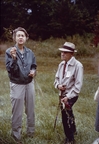
Less than one percent of endangered species ever get taken off the list.
The
Tennessean reports:
The U.S. Fish and Wildlife Service plans to officially remove the
wildflower by Sept. 2, from its list of plants that are near extinction.“The Tennessee coneflower’s recovery is an example of what can be
achieved through the combined efforts of dedicated partners,” said
Cindy Dohner, the Service’s Southeast Regional Director, in an emailed
announcement.
Echinacea tennesseensis was thought extinct until
Dr. Elsie Quarterman
rediscovered it in 1969 in the cedar glades which are her academic specialty.
She was 59 then.

Now she is 100, and still being honored
by her students
and by her state.
Aunt Elsie

was born in Valdosta and played basketball for Hahira High School,
before she started her very long career in botany and plant ecology.
As aye, Elsie!
-jsq
PS: This post owed to Patrick Quarterman.