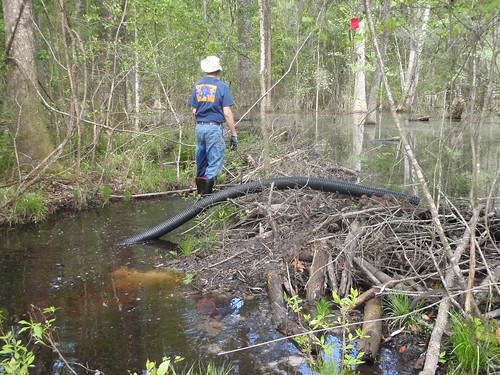
This is an ordinary 4 inch perforated drain pipe, bought at North Lowndes Hardware. It needs to go through that dam I’m standing on. How do you do that? First remove a bunch of sticks (gloves are useful for this): Continue reading
This is an ordinary 4 inch perforated drain pipe, bought at North Lowndes Hardware. It needs to go through that dam I’m standing on. How do you do that? First remove a bunch of sticks (gloves are useful for this): Continue reading
 So we were riding our bicycles today, and Gretchen got a phone call from Carolyn saying WCTV (Channel 6, Tallahassee/Thomasville) was at her house and wanted an interview, but she was at work and couldn’t do it. Gretchen rode down there, and this is the result: Slowing Down Speeders, by Deneige Broom:
Quarterman Road in Hahira was paved within the last year.How did WCTV hear about this? They saw our neighbor Carolyn on YouTube: Continue readingSome people who live there say people drive faster than the posted 35 miles per hour limit.
The Georgia Department of Transportation says this type of paving is safe for up to 45 miles per hour.
Lowndes County agreed to lower the speed limit to 35 miles per hour after they heard concerns from residents.
Since GDOT says the 45 mile per hour is acceptable, a posted speed limit of 35 can’t be enforced without approval.
Residents just want something done.
“We had drag racers out here a few weeks ago, two corvettes speed racing side by side up and down the road,” said Gretchen Quarterman who lives on the road. “It’s a neighborhood, we have 30 families that live on this road, they have small children.”
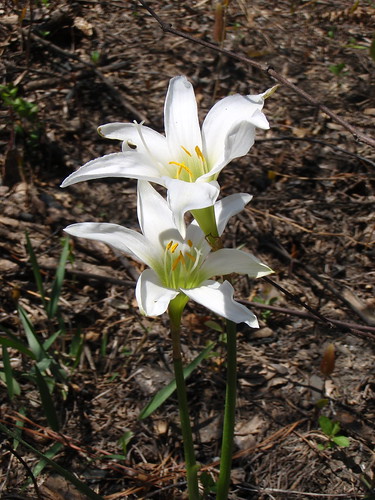 You may know these as Easter lilies, or “those lilies that grow in the ditches by the road in the spring.”
It turns out their real name is Treat’s Rain Lily,
and they are a native of south Georgia and north Florida,
plus a bit of Alabama, and don’t grow anywhere else.
We’ve seen them in Georgia counties along the Florida border
as far west as Cairo, but not any farther north.
Here’s
much more about these lilies.
You may know these as Easter lilies, or “those lilies that grow in the ditches by the road in the spring.”
It turns out their real name is Treat’s Rain Lily,
and they are a native of south Georgia and north Florida,
plus a bit of Alabama, and don’t grow anywhere else.
We’ve seen them in Georgia counties along the Florida border
as far west as Cairo, but not any farther north.
Here’s
much more about these lilies.
They really like where we burned this spring in the woods:
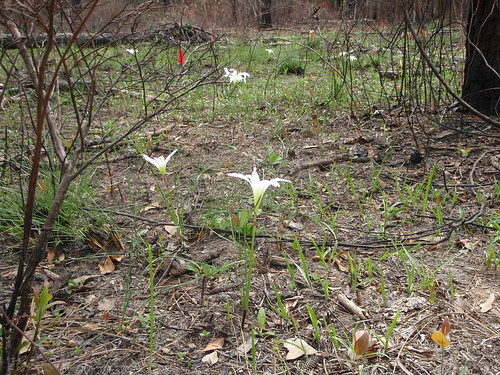
The red flags mark where we transplanted some longleaf pine seedlings.
Pictures by Gretchen Quarterman, 2-3 April 2010, Lowndes County, Georgia.
 Olivia Judson writes about
Divide and Diminish:
Olivia Judson writes about
Divide and Diminish:
A different process goes on when an island forms by splintering. Here, the ecosystem is pre-existing: the island is created with a set of residents already in place. But it is now too small to support them all.She’s not talking about prescribed forest burns, which are actually necessary for longleaf pine forest ecology. She’s talking about burns that destroy forests.What happens next is a kind of unraveling, a fraying, a disassembling such that the ecosystem becomes simpler, so as to fit the space that is now available. On those recently-created islands of Indonesia, for example, the smallest islands are home to many fewer species than the largest islands. And, as you’d expect, you don’t find big animals on the smallest islands either.
When we humans burn tracts of forest, or make islands in some similar way, the immediate impacts depend on a suite of factors, including how many islands there are, how big they are, and how close they are together. It also matters what is between them. Fields may be more hospitable to wildlife than roads or water; under some circumstances, life forms may be able to flit from one fragment to another, and the “island” nature of the fragments will be reduced. Perhaps we can use such patterns to shape how we use land, to try and minimize the impact we have.
Perhaps.
The once-mighty longleaf pine ecology that spread from eastern Virginia to east Texas now only exists in tiny islands separated by cities, fields, and roads. Maybe we should preserve the few patches that are left. This isn’t just about plants and animals, you know, it’s also about flood control, food supply, and living conditions.
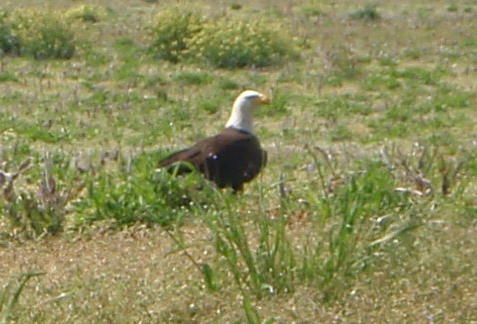
Half a century ago we overused pesticides, in particular DDT, which caused birds’ eggs to become too fragile. Bald eagles vanished from many places. But sometimes they come back, when we stop poisoning them and instead save some habitat.
The eagle pictured was just sitting beside the road as we drove by. There are more in nearby counties. Picture by Gretchen Quarterman, 23 March 2010.
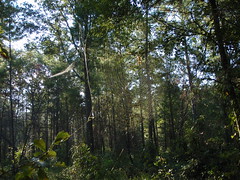 The state of Georgia already finances a
Conservation Reserve Program (CRP)
to plant longleaf pines with
associated native ground cover (partridge pea that the quail like,
and bunch grasses such as wiregrass that help fuel periodic fires).
The state of Georgia already finances a
Conservation Reserve Program (CRP)
to plant longleaf pines with
associated native ground cover (partridge pea that the quail like,
and bunch grasses such as wiregrass that help fuel periodic fires).
However, CRP payments typically only last 10 years and not more than 15 years, and such trees usually eventually get cut for sawtimber or pulpwood. Now that’s better than cotton: much less pollution involved and far more carbon sequestered.
But even better would be to treat such replanting as real reforestration and sell carbon sequestration rights for such forests. Like what is being planned in Florida: Continue reading
 Nor does any of this have to adversely affect the Georgia lumber industry.
It’s well established that the currently popular method of clearcutting
isn’t the only way. Pine forests can be managed profitably
via selective logging;
here’s
more about that.
Nor does any of this have to adversely affect the Georgia lumber industry.
It’s well established that the currently popular method of clearcutting
isn’t the only way. Pine forests can be managed profitably
via selective logging;
here’s
more about that.
That permits the forest to remain a forest, with native vegetation, wildlife, hunting, recreation, flood control, etc., all for more forests than we have now.
Plus carbon sequestration credits.
Cotton farmers might like growing trees better under such economic conditions.
All this is shovel-ready for stimulus. There’s no new technolgy to develop for forest planting or management. Just implement carbon-sequestration credits for ongoing sustainability, and perhaps use stimulus funding to speed planting trees.
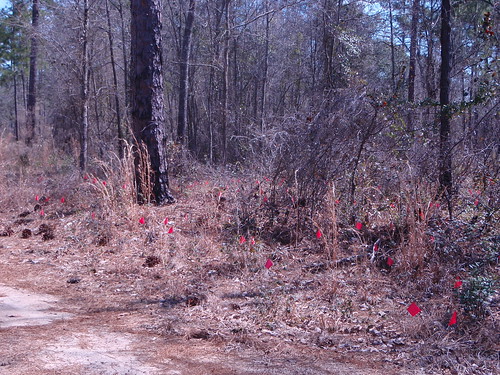
Here’s what they look like just after they come up:
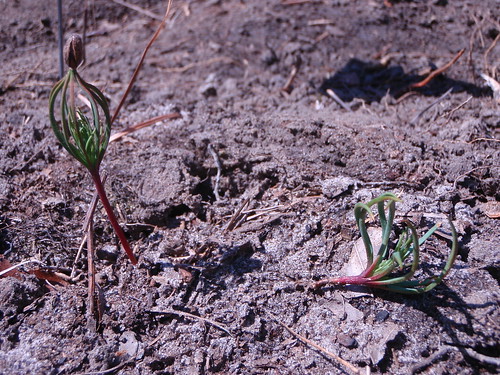
It’s a pretty big tree: Continue reading
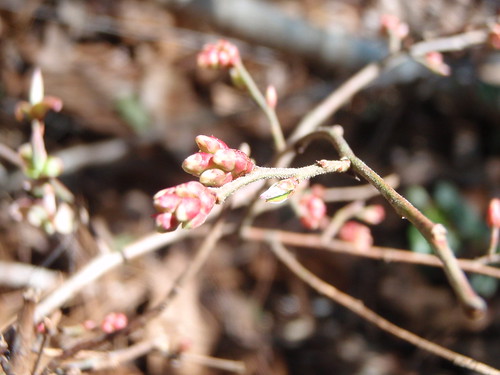
Pictures by Gretchen Quarterman, Lowndes County, Georgia, 28 February 2010.
Though a country be sundered, hills and rivers endure;
And spring comes green again to trees and grasses
Where petals have been shed like tears
And lonely birds have sung their grief.
…After the war-fires of three months,
One message from home is worth a ton of gold.
…I stroke my white hair. It has grown too thin
To hold the hairpins any more.—A Spring View, Tu Fu (c. 750), trans. Witter Bynner
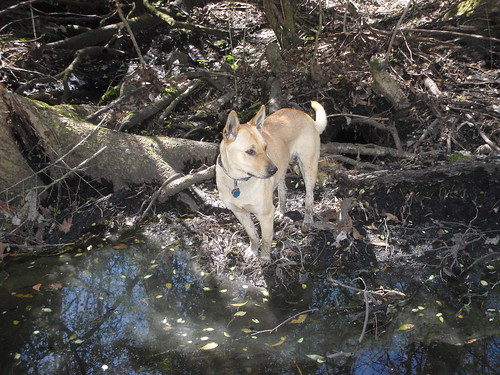
Pictures by Gretchen Quarterman, Redeye Creek, Lowndes County, Georgia, 28 Feb 2010.
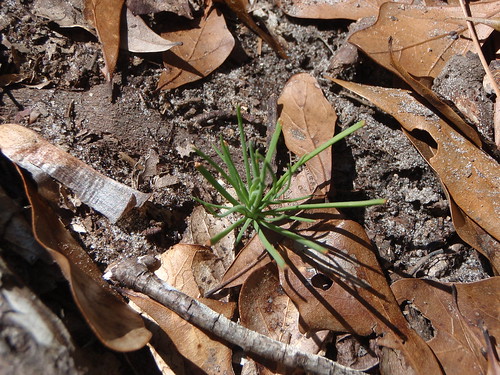
Many people think it takes fire to make longleaf produce seeds. These pictured seedlings came from a tree that hasn’t had fire near it for more than ten years. So why so many seedlings this year? Continue reading