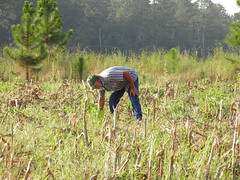
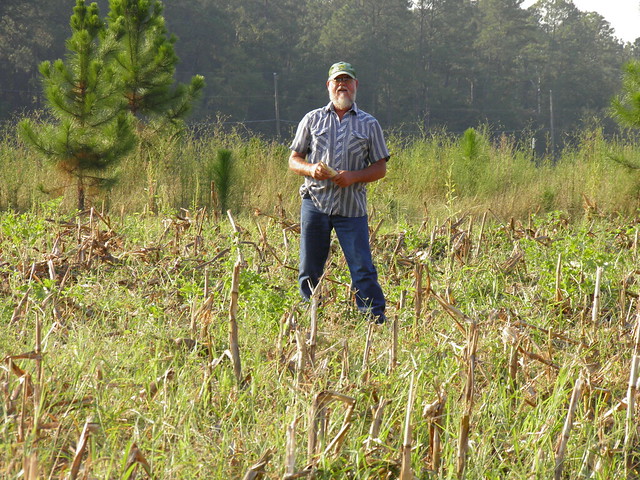
 Who’s that in the field?
Why it’s that Terry Davis,
collecting corn ears that his combine missed!
Who’s that in the field?
Why it’s that Terry Davis,
collecting corn ears that his combine missed!
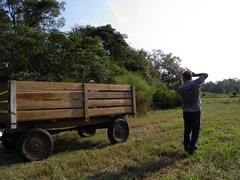 Some assembly required for the trailer.
 Here’s what we want to pick: ears of corn on standing stalks.
Here we go: Continue reading
Who’s that in the field?
Why it’s that Terry Davis,
collecting corn ears that his combine missed!
Some assembly required for the trailer.
Here’s what we want to pick: ears of corn on standing stalks.
Here we go: Continue reading
 Ever wonder why all the trees and shrubs die under the power lines? Company workers spray toxic chemicals on them.
Driving on GA 122 between Pavo and Barney and saw some electric company spraying going on. This fellow didn’t seem happy I was recording:
Ever wonder why all the trees and shrubs die under the power lines? Company workers spray toxic chemicals on them.
Driving on GA 122 between Pavo and Barney and saw some electric company spraying going on. This fellow didn’t seem happy I was recording:
Note that this worker is unprotected from this poison. No eye covering, no mask. Spraying is a shame in many ways.
Why do they do this? Continue reading
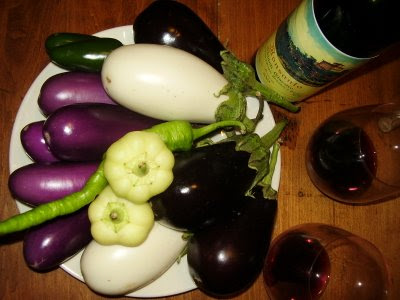 James Polk provides us some
Food for Thought:
James Polk provides us some
Food for Thought:
Let’s take a quick tally. 1) Locally grown food uses less fossil fuel getting to market, 2) fresh fruits and vegetables are healthier than packaged foods, and 3) buying locally grown food supports your local economy possibly keeping your would-be deadbeat friends employed.My favorite reason to eat locally grown foods is the taste. Go to a farmers’ market and load up on freshly picked tomatoes, bite into a raw crisp green bean, take home some succulent zuccinni and eggplant to stir-fry – you’ll be hard-pressed to find a more delicious meal.
Yep. That and okra. Anybody need some okra?
-jsq
 Gretchen found this one, too (think I can get her to blog?).
Judi Gerber writes about
Why Saving Farmland Is So Important:
Gretchen found this one, too (think I can get her to blog?).
Judi Gerber writes about
Why Saving Farmland Is So Important:
…without local farms, there’s no local food, or, as the American Farmland Trust (AFT) puts it: “No Farms, No Food.”.
And it’s not even just food:
Farmland is green space, even though most people don’t think of it that way. It is a significant contributor to environmental quality. As AFT states, “Farm and ranch lands provide food and cover for wildlife, help control flooding, protect wetlands and watersheds, and maintain air quality. They can absorb and filter wastewater and provide groundwater recharge. New energy crops even have the potential to replace fossil fuels.”
And there’s more:
Farmland provides fiscal stability to local governments and boosts the economy. It does this by contributing to a community’s infrastructure and helps a local economy through sales, job creation, and support services or businesses.There are some plans afoot about agrotourism in Lowndes County.One of the most unique of these support services is tourism, or more specifically, agri-tourism. There are plenty of places that people visit to see rural scenery or to enjoy the food or drink of a specific region including the wineries in California’s Napa Valley, or popular farm stays like those found in Italy, and increasingly, here in the United States.
-jsq
 Gretchen noted this VDT Editorial for 12 July 2010:
What We Think: Thankful for our farmers:
Gretchen noted this VDT Editorial for 12 July 2010:
What We Think: Thankful for our farmers:
Here in South Georgia, we are blessed with an abundance of farmer’s markets, both large and small, that enable us all to have access to fresh fruits and vegetables at low prices. Families, restaurants and schools all benefit from the local farms and markets year round, not just during the summer months.Here’s one of those farmers’ markets, in Hahira.Fresh fruits and vegetables are healthy, inexpensive, and an essential part of any diet. Take advantage of nature’s bounty that surrounds us and visit the markets. Take your family to one of the peach sheds and spend an afternoon picking your own and enjoying fresh ice cream.
Be thankful that the farmers are still willing to work hard on the land and be thankful you live in an area that encourages farmers and supports agriculture.
-jsq
 So I had a camera while I was mowing the neighbor’s pasture:
It seems you cannot catch cattle egrets with a tractor.
-jsq
Note the cultivator. The host had to explain what it was and show it several times so people would understand it. Yes, that’s how farmers used to control weeds before pesticide vendor propaganda convinced people of things like “don’t throw dirt on peanuts.” The cultivator throws dirt on weeds next to the peanuts, thus suppressing the weeds and releasing the peanuts.
Gretchen remarks:
Organic growing isn’t a specialty market, it’s a matter of safety. Chemicals sprayed on peanuts, soy beans, cotton and corn are TOXIC. Good management and kindness to the earth can grow crops in a sustainable way. Just say no to chemical spraying.Peanut growers may not like manual labor, but they’re having to resort to that anyway, because their pesticides have produced the mutant pigweed, which pesticides don’t kill. Spraying more and different herbicides doesn’t do it, either. The only way is physical removal of the pigweed. And a cultivator can do that without manual labor (the report mentions that). Oh yeah: and you don’t have to pay for pesticides to apply with a cultivator.
So, it’s time to stop poisoning our air, water, plants, animals, and people and move away from petrochemical pesticides. Organic is the way to go, and we know how to get there.
-jsq
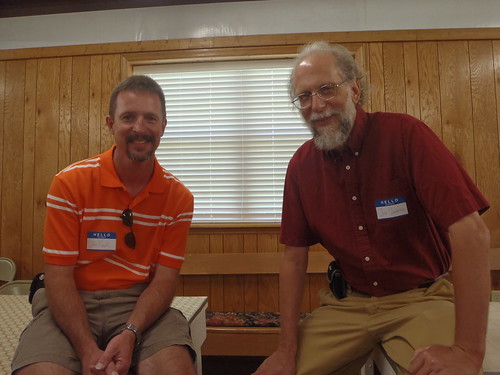
Picture of John N. Feazell Jr. and John S. Quarterman by Gretchen Quarterman, Lowndes County, Georgia, 27 June 2010.
Here is a picture of my father, David S. Quarterman, Jr. (1914-2005), with his friend, John N. Feazell, Sr. (1930-2008): Continue reading
Update: Jane Osborn has identified this as a Gulf Fritillary, Agraulis vanillae.
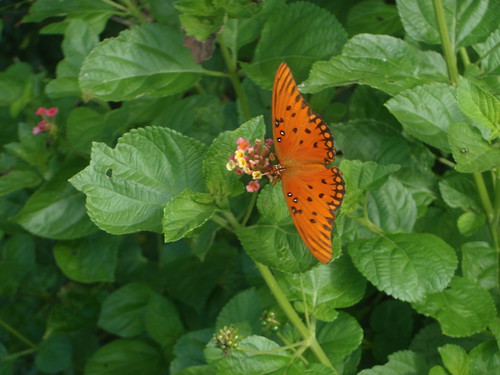
Pictures by John S. Quarterman, Lowndes County, Georgia, 21 June 2010.
Joyce called in a field agent to go find it: her son John N. Feazell, Jr., who lives near Savannah. Joyce reported back on 5 June 2010:
It is in the Cemetery you referred to. John went and found the marker and took this picture so it is for real.
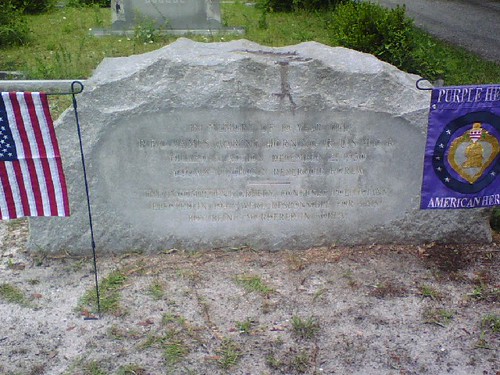
Picture of the marker in Gravel Hill Cemetery, Bloomingdale, Georgia, by John N. Feazell, Jr., 5 June 2010.
As I remarked to Joyce:
You can see how PFC Horner’s daddy might have been upset, having already lost every other immediate relative.She agreed.Too bad the North Koreans used it in their propaganda.
Roll credits.
-jsq