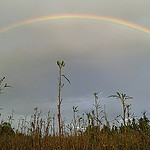
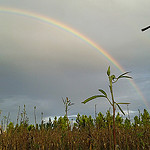
Japanese climbing fern on native Smilax, and what we do about that:

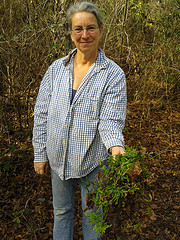
Gretchen with uprooted Japanese climbing fern
Pictures by John S. Quarterman for Okra Paradise Farms, Lowndes County, Georgia, 20 December 2012.
-jsq
Japanese climbing fern on native Smilax, and what we do about that:
Gretchen with uprooted Japanese climbing fern
Pictures by John S. Quarterman for Okra Paradise Farms, Lowndes County, Georgia, 20 December 2012.
-jsq
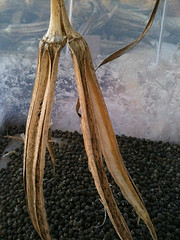
Dried and husked:
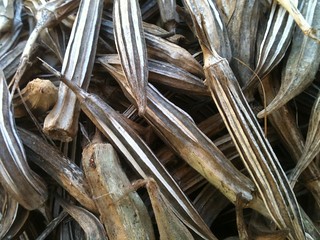
Seed:
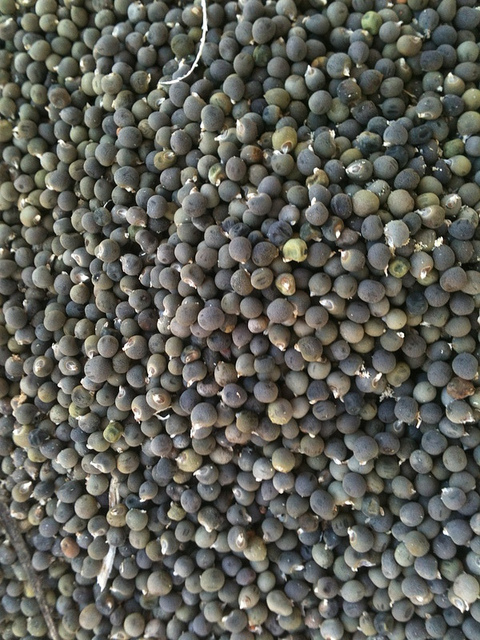
Pictures by Gretchen Quarterman for Okra Paradise Farms, Lowndes County, Georgia, 2012-11-10.
-jsq
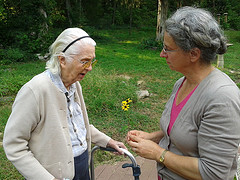
Elsie Quarterman is 102 years old today.
 She was born in Valdosta in 1910,
played basketball for Hahira High School,
graduated from Valdosta High School,
got a B.A. from Valdosta State College,
and taught English in Morven, Naylor, Columbus,
Lake Park, and Lyons, Georgia.
She was born in Valdosta in 1910,
played basketball for Hahira High School,
graduated from Valdosta High School,
got a B.A. from Valdosta State College,
and taught English in Morven, Naylor, Columbus,
Lake Park, and Lyons, Georgia.
Dr. Elsie Quarterman got a Masters and a Ph.D. from Duke University in
in botany and plant ecology.
 While studying for her Ph.D., she was a professor at Vanderbilt University
in Nashville, Tennessee, where she
was one of the first women full professors and was the first
woman department chair (Biology).
She specialized in the cedar glades of central Tennessee,
including
one now named after her by the state.
While studying for her Ph.D., she was a professor at Vanderbilt University
in Nashville, Tennessee, where she
was one of the first women full professors and was the first
woman department chair (Biology).
She specialized in the cedar glades of central Tennessee,
including
one now named after her by the state.
 There is an annual
wildflower festival
named after her.
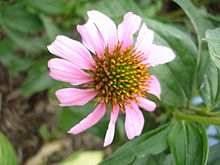
She rediscovered the cedar glade Tennessee coneflower, Echinacea tennesseensis,
which previously was thought to be extinct,
but has
since been taken off the endangered species list,
partly due to her work.
Her wikipedia page
has more information about her work and her many honors.
There is an annual
wildflower festival
named after her.
She rediscovered the cedar glade Tennessee coneflower, Echinacea tennesseensis,
which previously was thought to be extinct,
but has
since been taken off the endangered species list,
partly due to her work.
Her wikipedia page
has more information about her work and her many honors.
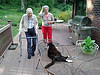
 Aunt Elsie still lives in her own house in Nashville, connected to her nephew
Patrick’s house, where Patrick and his wife Ann live and take care of her.
Aunt Elsie still lives in her own house in Nashville, connected to her nephew
Patrick’s house, where Patrick and his wife Ann live and take care of her.
Here is world traveller Elsie in 2006 leading a family group on the Isle of Skye in Scotland:
Continue readingRed and black:
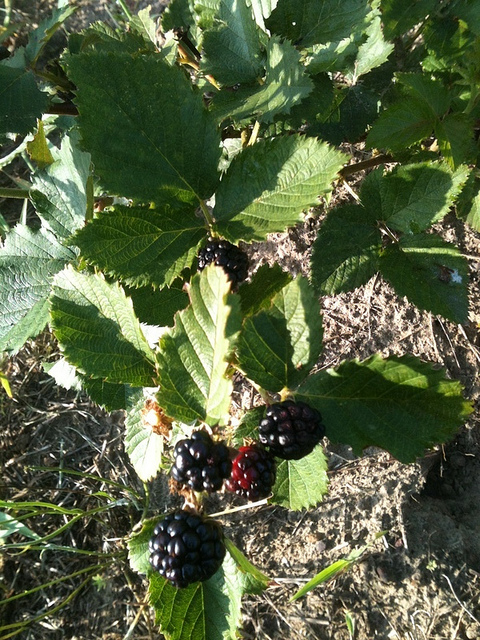
Red and black
John S. Quarterman, Gretchen Quarterman,
Brown Dog, Yellow Dog,
Pictures by Gretchen Quarterman for Okra Paradise Farms, Lowndes County, Georgia, 2012-07-26.
-jsq
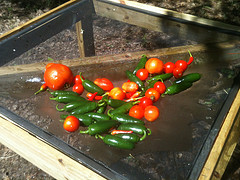
Picked and washed:
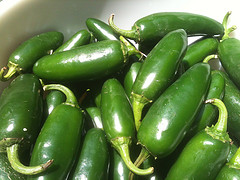
Sliced and canned:

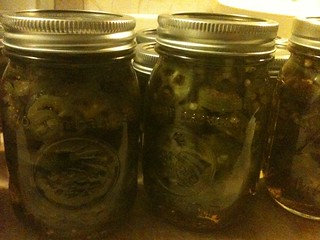
Pictures by Gretchen Quarterman for Okra Paradise Farms, Lowndes County, Georgia, 15 November 2012.
-jsq
Higher average temperatures
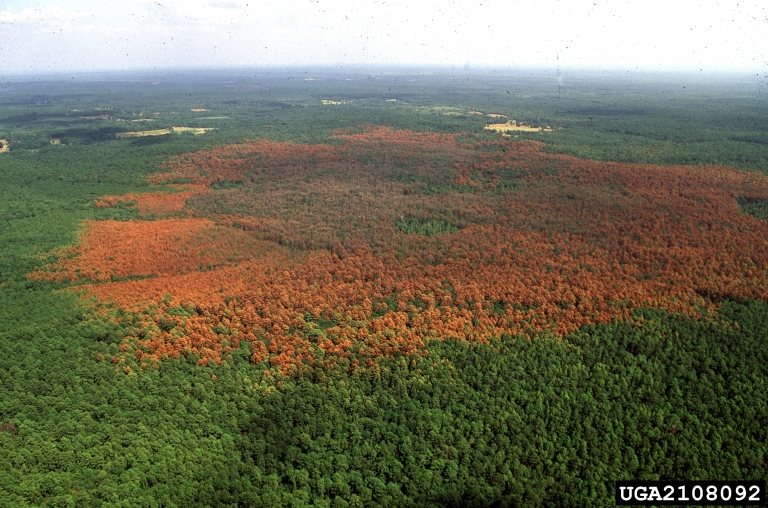 mean much more frequent droughts and trees dying faster in droughts
because of the temperatures.
That plus pine beetles, according to research from 2009.
Forestry is Georgia’s second largest industry
in terms of
employment and wages and salaries,
more than $28 billion a year
according to the Georgia Forestry Commission,
plus an estimated
$36 billion a year in ecosystem services
such as water filtration, carbon storage, wildlife habitat, and aesthetics,
not to mention hunting and fishing.
Climate change matters to Georgia’s forests and to Georgia.
mean much more frequent droughts and trees dying faster in droughts
because of the temperatures.
That plus pine beetles, according to research from 2009.
Forestry is Georgia’s second largest industry
in terms of
employment and wages and salaries,
more than $28 billion a year
according to the Georgia Forestry Commission,
plus an estimated
$36 billion a year in ecosystem services
such as water filtration, carbon storage, wildlife habitat, and aesthetics,
not to mention hunting and fishing.
Climate change matters to Georgia’s forests and to Georgia.
The paper appeared 13 April 2009 in the Proceedings of the National Academy of the Sciences, Temperature sensitivity of drought-induced tree mortality portends increased regional die-off under global-change-type drought, by Henry D. Adams, Maite Guardiola-Claramonte, Greg A. Barron-Gafford, Juan Camilo Villegas, David D. Breshears, Chris B. Zou, Peter A. Troch, and Travis E. Huxman, 106(17) 7063-7066, doi: 10.1073/pnas.0901438106.
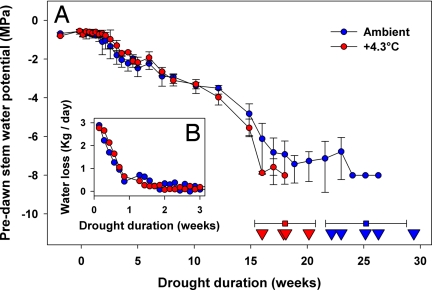
All drought trees in the warmer treatment died before any of the drought trees in the ambient treatment (on average 18.0 vs. 25.1 weeks, P <0.01; Fig. 1A).
They say warmer trees dying faster in drought wasn’t due to a difference in amount of water. Instead, they infer the warmer trees couldn’t breathe.
Combined, our results provide experimental evidence that piñon pines attempted to avoid drought-induced mortality by regulating stomata and foregoing further photosynthesis but subsequently succumbed to drought due to carbon starvation, not sudden hydraulic failure. Importantly, we isolate the effect of temperature from other climate variables and biotic agents
and show that the effect of warmer temperature in conjunction with drought can be substantial.
Our results imply that future warmer temperatures will not only increase background rates of tree mortality (13, 16), but also result in more frequent widespread vegetation die-off events (3, 35) through an exacerbation of metabolic stress associated with drought. With warmer temperatures, droughts of shorter duration—which occur more frequently—would be sufficient to cause widespread die-off.
How much more frequently?
They calculated an estimate for that, too: five times more frequently.
Of course, that’s for the specific kinds of forests they were studying,
and the exact number may vary, but the general trend is clear:
higher temperatures mean more frequent droughts,
like
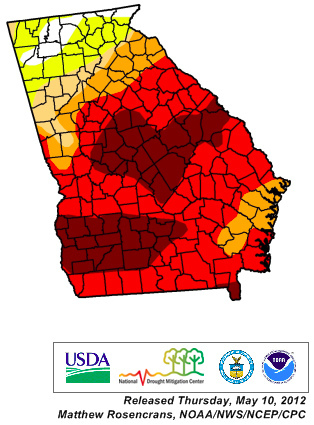 the year-long drought we just experienced in south Georgia.
This projection is conservative because it is based on the historical drought record and therefore does not include changes in drought frequency, which is predicted to increase concurrently with warming (2, 37—39). In addition, populations of tree pests, such as bark beetles, which are often the proximal cause of mortality in this species and others, are also expected to increase with future warming (7, 9, 38).
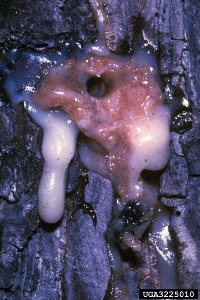
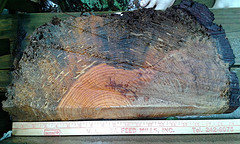
Bark beetles, such as the ones that bored into this 19 inch slash pine
and spread from there to twenty others I had to cut down to prevent further spread
of the pine beetles.
What happens when pine beetles spread
is what you see in the
first picture in this post:
acres and acres of dead red pine trees.
 Monoculture slash pine plantations may show this effect most clearly,
but look around here, and you’ll see red dead loblolly and longleaf pines,
too.
Monoculture slash pine plantations may show this effect most clearly,
but look around here, and you’ll see red dead loblolly and longleaf pines,
too.
The article is saying that if the beetles don’t get the trees weakened by droughts that will be much more frequent, the trees will die more quickly of suffocation, because the temperature is higher. Higher temperatures is something that should concern every Georgian in our state where forestry is the second largest industry and our forests protect our wildlife and the air that we breathe and the water that we drink.
-jsq
It's a weed, but it doesn't do much harm, and it's blue:
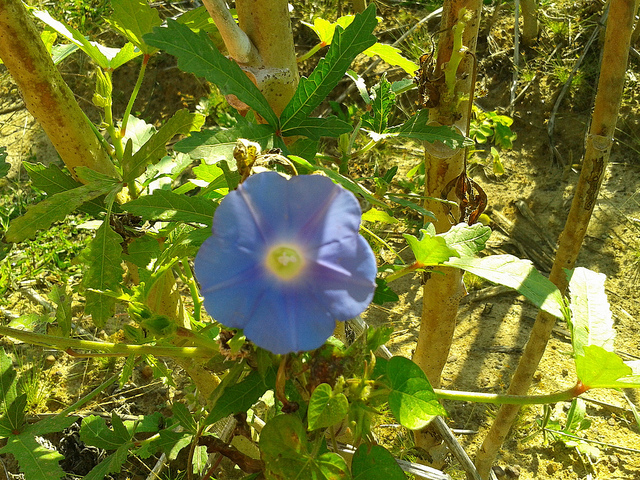
Blooming morning glory in the okra
Picture by John S. Quarterman for Okra Paradise Farms, Lowndes County, Georgia, 26 September 2012.
-jsq
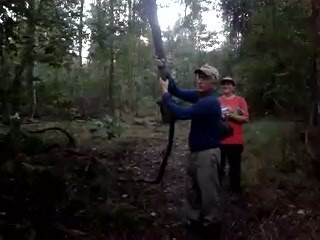 Seeing that grape vine, I said,
Tarzan lives here!
The visiting French botanist gave it a try.
Video by John S. Quarterman for Okra Paradise Farms, Lowndes County, Georgia, 22 August 2012.
Never works for me, but apparently he’s lighter. Watch him go:
Continue reading