Early registration extended to January 15th!
Update 2 January 2014: Or pay online.
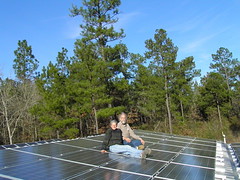
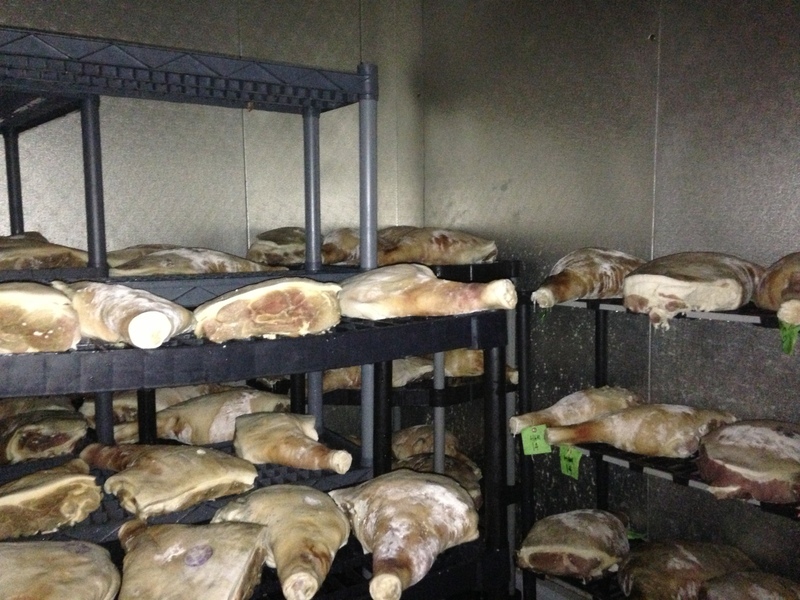
You can sign up here to see the goats, bees, chickens, ham, eggs, fruits, seeds, textiles, rain, and sun, and let’s not forget the worms!
Continue reading
Early registration extended to January 15th!
Update 2 January 2014: Or pay online.
You can sign up here to see the goats, bees, chickens, ham, eggs, fruits, seeds, textiles, rain, and sun, and let’s not forget the worms!
Continue reading
It’s not just for south Georgia:
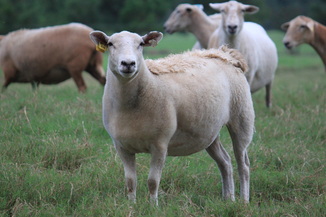
from Madison County, Florida, Julia Shewchuk will talk about her
goats of
Serenity Acres Farm.
Here’s Wayne and Julia’s welcome to Serenity Acres Farm:
We are a small farm in Madison County Florida working toward the big goal of bringing you
locally grown products and farm raised products without the use of major pesticides, hormones and genetically modified components.
Our philosophy is simple: Grow and raise it locally and then offer only the freshest and best of what we produce.
The goats appear about a minute into this video, with milking about 2 and a half minutes in: Continue reading
How about a registration for
South Georgia Growing Local 2014
as a Christmas gift?
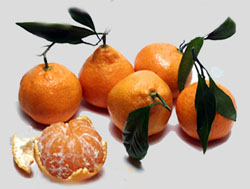
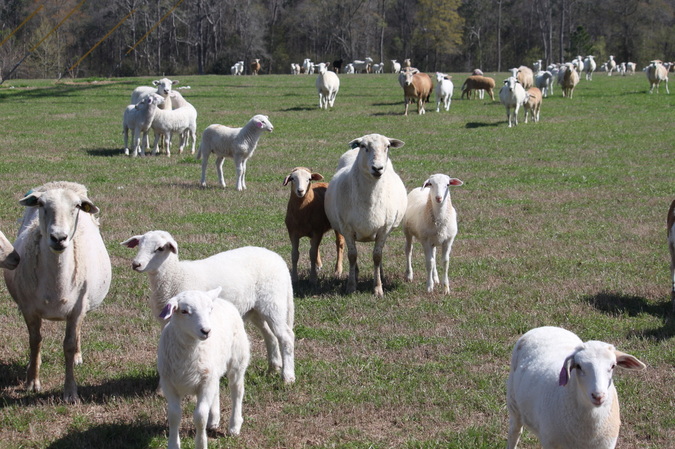
Have fun and support the local economy on the Farm Tour (citrus, sheep, olives, and row crops) Friday 24 January 2014, plus also dinner and a movie.
Learn a lot, eat well with the local community at the talks Saturday 25 January 2014, about animals, orchards, gardens, health, farmer experiences, and policy.
You can register using this form.
And you can join events on facebook so everybody can see you’re going.
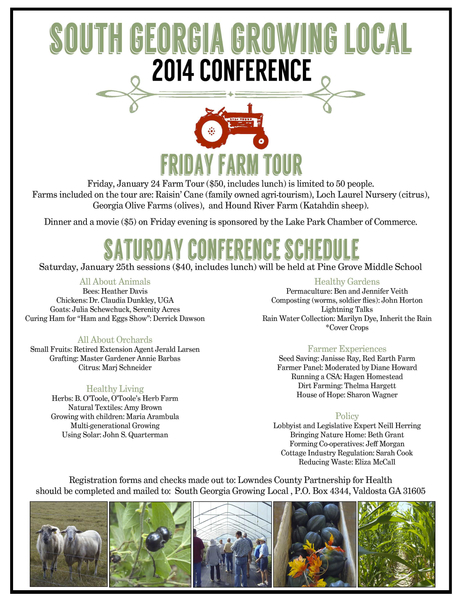
Here’s the conference flyer for more information: Continue reading
Here’s
a video playlist:
Videos by John S. Quarterman for Okra Paradise Farms,
Lowndes County, Georgia, 20 November 2013.
What has about 300 heads and eats really well?
A local agriculture conference coming to Lowndes County 24 January 2014.
South Georgia Growing Local 2014 is a local food conference for growers, consumers, homesteaders in South Georgia. Farm Tours 1/24 — Conference 1/25
You can like the
facebook page
and join events there
for the conference itself on January 25th
and for
the farm tours on January 24th.
Agritourism has come to Lowndes County!
This is one reason a wide variety of organizations, including two Chambers of Commerce, are supporting this conference:
it will fill hotel rooms.
Even more, it’s about longterm local economy through growing and buying food right here in south Georgia and north Florida.
All that and it tastes good, too!
Pesticide poisoning has rapidly increased in Argentina as Monsanto-seed pesticided crops ramped up. Meanwhile in Georgia, 90+% of common crops already are doused in pesticides. What effects are all those poisons having on our own children and adults?
Michael Warren and Natacha Pisarenko wrote for AP today, Argentines link health crisis to agrochemicals,
Argentine farmworker Fabian Tomasi wasn’t trained to use protective gear as he pumped pesticides into crop dusters. Now at 47, he’s a living skeleton.
Schoolteacher Andrea Druetta lives in a town where it’s illegal to spray agrochemicals within 550 yards of homes, and yet soy is planted just 33 yards from her back door. Recently, her boys were showered in chemicals while swimming in their backyard pool.
Sofia Gatica’s search for answers after losing her newborn to kidney failure led to Argentina’s first criminal convictions for illegal spraying last year. But 80 percent of her neighbors’ children surveyed carry pesticides in their blood.
Meanwhile, German researchers found pesticides in all samples of urine, and back in the U.S.A. and Canada, researchers found pesticide metabolites in 95% of schoolchildren tested.
90+% of cotton, soybeans, peanuts, and corn around here are doused in agrochemicals, and even Continue reading
This is why there is an epidemic of obesity, diabetes, and heart disease in the U.S.: food deliberately engineered to make people eat until they get fat. Georgia is not quite one of the fattest states, but Lowndes County is one of the fattest counties. There is something we can do, even while Big Food continues to act like Big Tobacco.
Michael Moss wrote for NYTimes 20 February 2013, The Extraordinary Science of Addictive Junk Food,
On the evening of April 8, 1999, a long line of Town Cars and taxis pulled up to the Minneapolis headquarters of Pillsbury and discharged 11 men who controlled America’s largest food companies. NestlĂ© was in attendance, as were Kraft and Nabisco, General Mills and Procter & Gamble, Coca-Cola and Mars. Rivals any other day, the C.E.O.’s and company presidents had come together for a rare, private meeting. On the agenda was one item: the emerging obesity epidemic and how to deal with it. While the atmosphere was cordial, the men assembled were hardly friends. Their stature was defined by their skill in fighting one another for what they called “stomach share” — the amount of digestive space that any one company’s brand can grab from the competition.
James Behnke, a 55-year-old executive at Pillsbury, greeted the men as they arrived. He was anxious but also hopeful about the plan that he and a few other food-company executives had devised to engage the C.E.O.’s on America’s growing weight problem. “We were very concerned, and rightfully so, that obesity was becoming a major issue,” Behnke recalled. “People were starting to talk about sugar taxes, and there was a lot of pressure on food companies.” Getting the company chiefs in the same room to Continue reading